A) The Mond process, for the purification of Zn
B) The Mond process, for the purification of Ni
C) The Hall process, for the purification of Al
D) The Hall process, for the purification of Cr
E) The zone refining process, for the purification of Fe
G) None of the above
Correct Answer

verified
Correct Answer
verified
Correct Answer
verified
Correct Answer
verified
A) zone refining.
B) electrorefining.
C) distillation.
D) sublimation.
E) alloying.
G) None of the above
Correct Answer
verified
Correct Answer
verified
A) remove titanium(IV) oxide
B) remove silica
C) remove iron oxides
D) remove potassium
E) remove fluorides
G) A) and D)
Correct Answer
verified
Correct Answer
verified
A) SiO2(s) → SiO2(g)
B) SiO2(s) + CaO(s) → CaSiO3(l)
C) SiO2(s) + 4HF(g) → SiF4(g) + 2H2O(g)
D) SiO2(s) + C(s) → Si(l) + CO2(g)
E) SiO2(s) + CO(g) → SiCO3(l)
G) A) and B)
Correct Answer
verified
Correct Answer
verified
A) Cu
B) Au
C) Mg
D) Cl
E) Ca
G) A) and B)
Correct Answer
verified
Correct Answer
verified
A) Wood charcoal
B) Chile salt peter
C) Potassium nitrate
D) Sulfur
E) Ammonia
G) B) and E)
Correct Answer
verified
Correct Answer
verified
A) Cl-
B) Sr2+
C) K+
D) S2-
E) Pb2+
G) A) and C)
Correct Answer
verified
Correct Answer
verified
A) CH4(g) + H2O(g) → CO(g) + 3H2(g)
B) 3FeCl2(s) + 4H2O(g) → Fe3O4(s) + 6HCl(g) + H2(g)
C) NaH(s) + H2O(l) → NaOH(aq) + H2(g)
D) CO(g) + H2O(g) → CO2(g) + H2(g)
E) None of these methods is useful.
G) C) and D)
Correct Answer
verified
Correct Answer
verified
B) False
Correct Answer
verified
Correct Answer
verified
A) nickel; electrolytically
B) aluminum; electrolytically
C) nickel; by reaction with metallic sodium
D) aluminum; by reaction with metallic sodium
E) copper; electrolytically
G) B) and C)
Correct Answer
verified
Correct Answer
verified
A) make its extraction from its ore easier.
B) convert the metal to an oxide.
C) disguise the true identity of the metal.
D) prepare ultrapure metal samples.
E) enhance properties, like conductivity.
G) A) and C)
Correct Answer
verified
Correct Answer
verified
A) 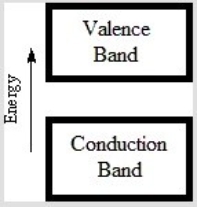
B) 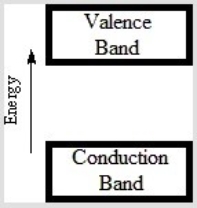
C) 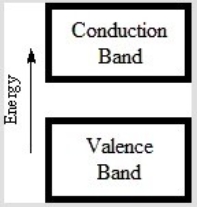
D) 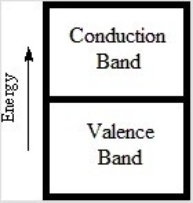
E) 
G) A) and B)
Correct Answer
verified
Correct Answer
verified
A) Na3PO4
B) Na3P
C) Mg3(PO4) 2
D) AlPO4
E) Ca3(PO4) 2
G) B) and D)
Correct Answer
verified
Correct Answer
verified
A) carbon (coke) .
B) carbon monoxide.
C) molecular hydrogen.
D) sodium.
E) electrolysis.
G) A) and B)
Correct Answer
verified
Correct Answer
verified
Correct Answer
verified
Correct Answer
verified
A) Impure copper is oxidized at the anode, and pure copper is reduced at the cathode. Impurities dissolve into solution.
B) Impure copper is oxidized at the cathode, and pure copper is reduced at the anode. Impurities dissolve into solution.
C) Impure copper is oxidized at the anode, and pure copper dissolves into solution. Impurities remain on the cathode.
D) Impure copper is oxidized at the cathode, and pure copper dissolves into solution. Impurities remain on the anode.
E) Impure copper precipitates from solution onto the cathode, and pure copper remains on the anode.
G) B) and D)
Correct Answer
verified
Correct Answer
verified
B) False
Correct Answer
verified
Correct Answer
verified
A) amalgamation.
B) the Hall process.
C) the Mond process.
D) pressurization.
E) a blast furnace.
G) A) and B)
Correct Answer
verified
Correct Answer
verified
Correct Answer
verified
Electrolytic reducti...View Answer
Correct Answer
verified
View Answer
Showing 41 - 60 of 117
Related Exams